
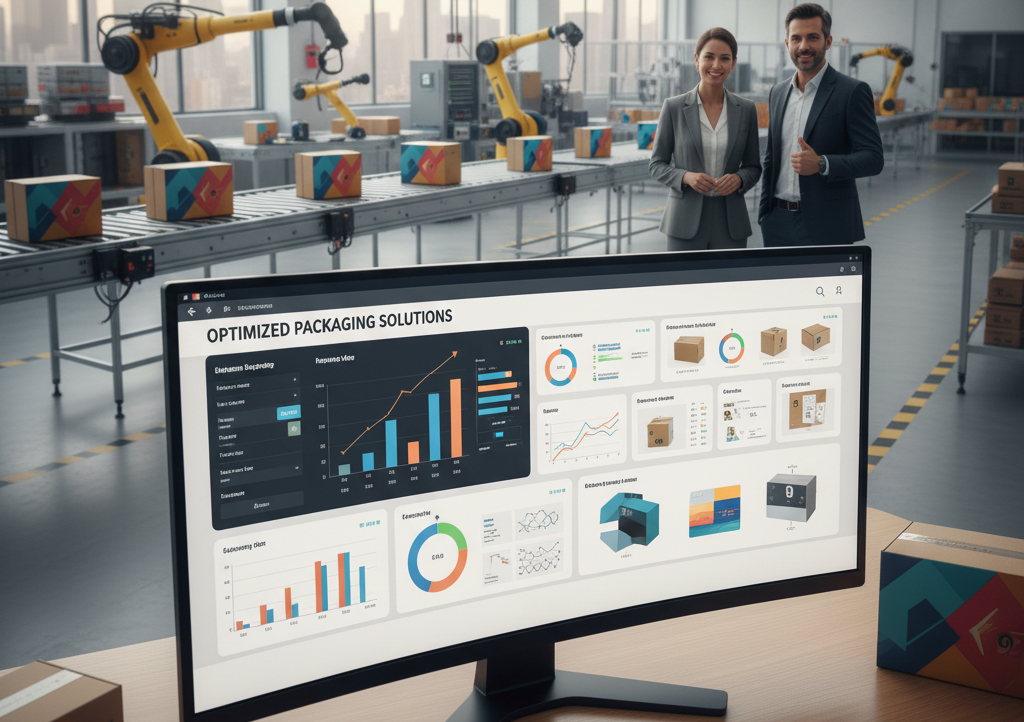

The packaging sector in the United States is massive, complex, and rapidly evolving. With rising consumer demands for customization, sustainability, and fast delivery, many packaging firms are looking toward Web-to-Print (W2P) platforms to stay competitive. Yet, the difference between success and costly failure often lies not in the tool itself, but in how well the selection and implementation process is guided.
Jumping straight into a W2P solution without a structured audit or consultant can lead to integration mismatches, hidden costs, or poor adoption. In this post, I’ll lay out key U.S. market data and make the case for why engaging a consultant or audit is almost mandatory for packaging businesses aiming to adopt Web-to-Print.
U.S. Packaging Market Snapshot: Why the Stakes Are High
Before diving into the why, understanding the scale and dynamics in the U.S. packaging market helps underscore why a misstep can be very costly.
-
The U.S. packaging market is projected to reach USD 208.98 billion in 2025, growing at a compound annual growth rate (CAGR) of 3.98% toward USD 254.01 billion by 2030.
-
Another source estimates the U.S. packaging market to be USD 197.18 billion in 2024, with forecasts pointing to USD 283.07 billion by 2032, at a CAGR of ~4.0%.
-
In terms of units, the U.S. packaging industry output rose from ~ 615.4 billion units in 2018 to ~ 668.8 billion in 2023, and is projected to hit ~ 717.2 billion units by 2028 (CAGR ~1.4%).
-
The flexible packaging segment alone accounted for about USD 63.46 billion in 2023, with forecasts showing ~ 4.1% CAGR through 2030.
-
The Packaging & Labeling Services industry (which includes finishing, labeling, and some packaging support services) is valued at ~ USD 13.8 billion in 2025, with over 15,300 businesses in the U.S.
-
On the Web-to-Print front, the global market is estimated at USD 1.1 billion in 2022, and is projected to reach USD 1.96 billion by 2030 (CAGR ~7.8%). Another forecast pegs the W2P market in 2024 at USD 1,470.5 million and rising to USD 2,812.2 million by 2033 (CAGR ~7.4%).
-
Several industry reports show that converters and packaging print shops are actively investing in digital, automation, and W2P technologies to remain competitive.
These numbers tell us:
-
Volume & value are huge — the magnitude of orders, SKUs, substrates, and finishes is not trivial.
-
Growth is steady but competitive — margins are under pressure.
-
Digital / automated solutions are a rising imperative — many players already recognize the need to modernize.
Given these stakes, a poorly scoped W2P deployment can cost more than just money — it may still leave you behind in speed, flexibility, and client satisfaction.
Why Doing a Consultant-Led Audit or Assessment First Makes Business Sense
Here are the compelling reasons why packaging businesses in the U.S. should not skip a consultant or structured audit before choosing a Web-to-Print solution.
1. Reality Check on Business Processes
A consultant will map your entire workflow:
-
Artwork prep, dieline generation, file approvals
-
Proofing, version control, change tracking
-
Production scheduling, finishing, logistics
-
Packaging-specific constraints (substrate behavior, coatings, tolerances)
You may think your process is simple; a detailed audit often surfaces hidden inefficiencies or redundancies.
2. Clear Requirements, Not Guesswork
Without domain guidance, it’s easy to make a generic checklist of “features.” But packaging has unique demands:
-
2D & 3D previews for folds and boxes
-
Validation logic for substrates, coatings, bleed, cut tolerances
-
Constraints that restrict impossible combinations
-
Ability to handle special finishes (embossing, spot UV, lamination)
A consultant helps you define must-haves vs nice-to-haves, ensuring you don’t overpay or miss critical capabilities.
3. Vendor Selection & Neutral Advice
If you rely only on vendors for evaluation, bias can creep in. An independent consultant (not tied to a single vendor) can:
-
Compare multiple W2P solutions objectively
-
Score them based on your real-world packaging needs
-
Warn you of vendors that seem strong but are weak in packaging domains
This helps ensure your choice fits your business, not vice versa.
4. Architecture & Integration Blueprint
A consultant is crucial in designing how your W2P system should plug into your ecosystem:
-
APIs and data flows with MIS, ERP, inventory, shipping
-
Scalability, caching, performance, concurrency
-
Failover logic, backup, data sync
-
Managing evolving demands as you scale
If you skip this planning, you risk investing in a platform that works in isolation but fails in real operations.
5. Pilot Testing & Controlled Rollout
Rather than launching across all SKUs and clients, consultants recommend pilot programs:
-
Select a subset of products or markets
-
Validate customer behavior, usability, error rates
-
Use feedback to refine before full-scale launch
This approach de-risks your investment.
6. Change Management & Training
Technology alone doesn’t change behavior. Consultants help:
-
Train your internal teams (sales, art, customer support, production)
-
Define adoption roadmaps
-
Monitor user feedback and iterations
-
Ensure internal resistance doesn’t slow the rollout
7. Cost Visibility & Negotiation Support
Consultants know industry norms and can:
-
Identify hidden fees (template setup, support, custom modules)
-
Negotiate with vendors more confidently
-
Ensure you don’t get locked into one-sided SLAs
In many cases, this scrutiny can save 10–30% on project cost or avoid hidden surprises later.

What a Consultant-Led Audit Typically Delivers
Here’s a rough outline of what a consultant audit / discovery phase would yield:
| Deliverable | Description | Value |
|---|---|---|
| Process map & gap analysis | Visual mapping of current workflows and pain points | Highlights inefficiencies to improve before W2P |
| Requirements blueprint | Must-have features, architectural constraints, integration needs | Prevents feature creep or under-spec |
| Vendor shortlist & scoring | A comparative matrix of W2P vendors aligned to your requirements | Helps you choose objectively |
| Pilot plan & test parameters | Strategy for validating solutions with minimal risk | Enables adjustments before full roll-out |
| ROI & risk model | Cost, benefit, break-even, risks | Gives financial justification to stakeholders |
| Change management plan | Training, stakeholder alignment, adoption roadmap | Speeds up internal buy-in and smoother launch |
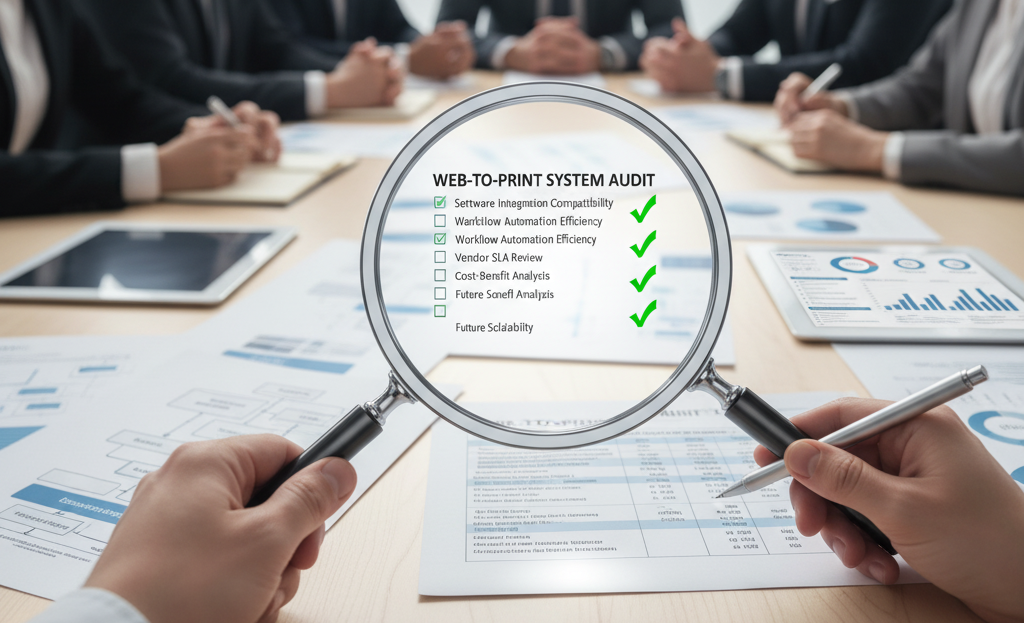
Case Scenarios: What Can Go Wrong Without an Audit
To illustrate the danger of skipping proper assessment:
-
A packaging firm adopted a W2P solution lacking substrate constraints. Clients chose combinations impossible in production, leading to frequent reprints and delays.
-
Another company integrated W2P directly to shipping software without proper SKU synchronization. Orders got misrouted or mis-labeled, causing client dissatisfaction.
-
A third business underestimated load / concurrency handling; a big order day overloaded the system, causing performance issues and lost orders.
In all these cases, a good upfront audit or consultant involvement would have caught the problems early.

Conclusion
The U.S. packaging market’s size, growth, and complexity make it imperative that packaging businesses carefully choose their Web-to-Print path. The right platform can be transformative; the wrong one can become a costly liability.
At Fionetic Technologies, we’ve seen packaging companies succeed when they involve expert consultants early in the process. By aligning technology with business goals, you not only avoid costly mistakes but also unlock the full potential of Web-to-Print. We believe the most successful deployments start with rigorous audit and domain-specific consultancy. Whether you’re gearing up for your first W2P implementation or reconsidering an existing one, start with the diagnosis, not the purchase.
Inquire Now to know more about the Custom Audit Plan for Packaging + Web-to-Print Implementation
Before you choose your platform, ask yourself: Do we have the right guidance in place?
– Written by Parker Nelson, Fionetic Technologies